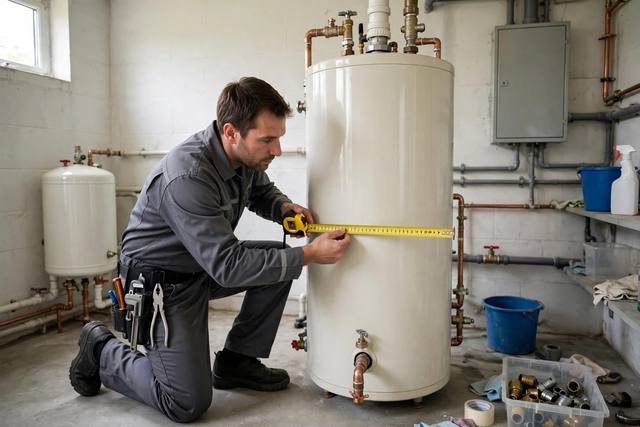
Choosing the wrong size water heater is a common and costly mistake. Too small, and you run out of hot water mid-shower. Too large, and you pay more up front and waste energy heating water you do not use. Here is how to size a water heater for your Apache Junction home — and when to let a professional confirm the math.
Two Ways to Size: Tank and Tankless
Tank heaters are sized by storage capacity in gallons. Tankless heaters are sized by flow rate in gallons per minute (GPM) and by how much they can raise the water temperature.
Sizing a Tank Water Heater
A useful starting point is the number of people in the household. These are general guidelines only:
| Household size | Typical tank size |
|---|---|
| 1–2 people | 30–40 gallons |
| 2–4 people | 40–50 gallons |
| 4–6 people | 50–75 gallons |
| 6 or more people | 75 gallons or larger, or multiple units |
These are estimates. Your actual needs depend on how and when your household uses hot water.
Factors that push you toward a larger tank: Several people showering in the morning, soaking tubs or large shower systems, frequent laundry or dishwasher use, guests or a growing family, slow recovery from an electric unit.
Factors that allow a smaller tank: A small household, staggered hot water use, efficient fixtures, warm incoming water — which Arizona often has in summer.
Also check the first-hour rating on the label. It tells you how much hot water the heater can deliver in an hour starting with a full tank. For many households, it is more useful than tank size alone.
Sizing a Tankless Water Heater
Start with your peak demand — the hot water fixtures you might run at the same time. Typical flow rates:
| Fixture | Typical hot water flow |
|---|---|
| Bathroom sink | 0.5–1.5 GPM |
| Kitchen sink | 1.0–2.0 GPM |
| Shower | 1.5–2.5 GPM |
| Dishwasher | 1.0–2.0 GPM |
| Washing machine | 1.5–3.0 GPM |
Add up what could run at once. For example, a shower (2.0), a kitchen sink (1.5) and a dishwasher (1.5) total about 5.0 GPM. Next, determine temperature rise: your target temperature minus your incoming water temperature. If you set the heater to 120°F and incoming water is 70°F, you need a 50°F rise. Warmer incoming water means less rise and more available flow, which is why a given tankless unit can deliver more in Arizona than in a cold climate. Winter water here is cooler than summer water, so size for your coldest realistic conditions. Then compare your GPM and temperature rise to the manufacturer's performance chart. Always check the GPM at your required rise, not only the maximum advertised number. If you're considering a switch, our tankless water heater service connections can help you evaluate options for your home.
Gas vs. Electric Sizing
Gas tankless units typically deliver higher flow than electric ones, which is why they are common for whole-home use. Electric tankless units are compact and do not need venting, but larger models draw substantial power and may require dedicated circuits or panel upgrades. Have your electrical capacity checked before choosing.
Common Sizing Mistakes
- Sizing for average use instead of peak use. Plan for your busiest hour.
- Ignoring recovery rate. A big tank with weak recovery can still run out.
- Trusting maximum GPM. Check performance at your temperature rise.
- Oversizing without a reason. Bigger costs more to buy and to run.
- Forgetting future needs. A growing family, a remodel or a new tub can change demand.
- Overlooking space. A larger tank needs room and a proper drain pan and relief line.
Does Size Affect Energy Bills?
Yes. A tank that is much larger than needed loses more heat through standby loss. A unit that is too small can lead to constant cycling and frustration. The goal is the smallest unit that reliably meets your peak demand.
Signs Your Current Heater Is the Wrong Size
- Hot water runs out quickly during normal use
- Long recovery times
- Temperature drops when two fixtures run
- A tankless unit shutting off or throwing error codes when demand is high
- Hot water that always seems more than you need, and high energy use
Sometimes the problem is not size at all. Sediment, a failed element or a broken dip tube can reduce capacity. A plumber can tell whether your heater is undersized or malfunctioning.
A Simple Sizing Checklist
- Count the people and bathrooms in your home.
- Note when hot water use peaks.
- List fixtures and appliances that run at the same time.
- For tankless, add the GPM and find your temperature rise.
- Decide on fuel type and available space.
- Check electrical or gas capacity.
- Ask a plumber to confirm your estimate.
A professional water heater installation starts with this sizing math — get it right and the new unit simply works.