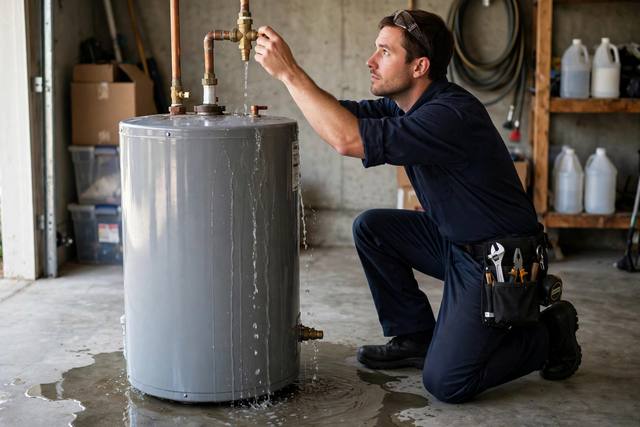
Some water heater problems can wait for a normal appointment. Others cannot. Knowing the difference can protect your family, your home and your budget. This guide helps Apache Junction homeowners recognize when to call right away — and when a scheduled visit will do.
True Emergencies: Call Immediately
- A gas smell. If you smell gas near a Gas Water Heater Repair, do not light flames, flip switches or use a phone inside. Leave the home and call your gas utility or emergency services from a safe location.
- Burning smell, scorching or smoke. Burnt odors, melted wiring or discoloration on or near the heater can mean an electrical fault or overheating. What may start as a simple no-hot-water call can sometimes reveal scorching, melted wiring, or overheating that needs immediate attention. Most failures do not lead to fires, but a sudden loss of hot water together with burning smells should never be ignored.
- Active or heavy leaking. Water spreading across a floor can quickly ruin flooring, drywall and belongings. Shut off the water supply to the heater and call.
- Water near electrical components. Water and electricity do not mix. Turn off power if it is safe to reach the panel and keep clear of the unit.
- Relief valve discharging steadily. A temperature and pressure relief valve that is continually releasing water may indicate dangerous pressure or temperature. This needs prompt professional attention.
- Rumbling or banging paired with leaks or overheating signs. Loud noises alone often point to sediment. Combined with leaks, steam or extremely hot water, they warrant a call.
- Carbon monoxide alarm sounds. Leave the home immediately and call emergency services. Gas appliances with blocked or damaged venting can produce carbon monoxide.
Urgent but Not Always Emergencies
- No hot water: A major inconvenience, especially for families with children, elderly residents or health needs. The cause may be simple or serious, so inspection is wise.
- Repeated breaker trips: Do not keep resetting. Call soon.
- Pilot light will not stay lit: Avoid relighting repeatedly.
- Rusty hot water: Can indicate corrosion and a tank nearing failure.
Problems That Can Usually Wait for a Scheduled Visit
- Slightly noisy operation with no leaks
- Water that is a little less hot than usual
- Minor drips at a valve with the water supply off
- Routine maintenance or a planned upgrade
When in doubt, call and describe the symptoms. A professional can help you judge the urgency.
What to Do Before the Plumber Arrives
- Turn off the water supply to the heater if there is a leak.
- Turn off electricity at the breaker for electric units if it is safe.
- Turn the gas control to off for gas units if you know how — and never if you smell gas.
- Keep children and pets away.
- Clear the area so the technician has access.
- Take photos for insurance.
- Write down symptoms, noises, smells and when the problem started.
What a Good Emergency Plumber Should Do
A reliable plumber should:
- Confirm arrival time and pricing before dispatching
- Hold a current Arizona contractor license, which you can verify through the Arizona Registrar of Contractors
- Diagnose before recommending work
- Explain repair and replacement options clearly
- Test the repair before leaving
- Provide a written estimate and warranty details
What Does Emergency Service Cost?
Emergency rates can be higher than standard rates because of after-hours availability. Emergency rates run higher than standard rates because of after-hours availability, and holiday rates are often higher still. Treat any rate as company-specific — actual pricing varies by company, so ask for the total before authorizing work. Remember that a small repair today may cost far less than water damage, mold remediation or flooring replacement later.
When Replacement Is the Safest Choice
Replacement is often safer than repair when the heater has fire or heat damage, a leaking tank, severe corrosion, major electrical damage or repeated failures. A proper replacement includes checking the surrounding electrical, gas, venting and water connections so that whatever caused the original failure is addressed.
Preventing Emergencies
- Annual inspection and maintenance
- Flushing to reduce sediment
- Checking the relief valve and anode rod
- Keeping the heater area clear of clutter and flammables
- Setting the thermostat around 120°F
- Installing carbon monoxide alarms near gas appliances
- Replacing units that are 10 years old or older before they fail
If you're facing an urgent situation right now, emergency water heater repair connections are available — or Contact Us to describe what's happening and get help fast.