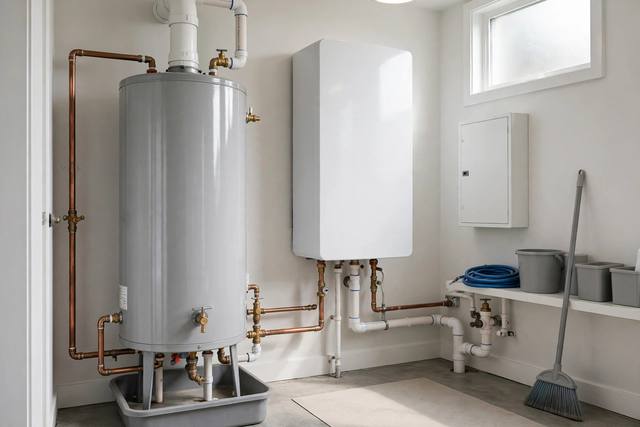
When it is time to replace a water heater, the biggest decision is often the type. Traditional tank heaters have been the standard for decades, while tankless models promise endless hot water and lower energy use. Which one suits your home depends on your budget, household size and installation conditions. If you're starting your research on water heater options in Apache Junction, this comparison covers what actually matters.
How a Tank Water Heater Works
A tank heater stores 30 to 80 gallons of hot water and keeps it at a set temperature. When you open a tap, hot water leaves the top of the tank and cold water refills the bottom. Because the tank keeps reheating stored water, it loses energy even when no one is using hot water. This is called standby heat loss.
How a Tankless Water Heater Works
A tankless heater, also called an on-demand heater, has no storage tank. When a hot tap opens, water flows through the unit and is heated instantly by a gas burner or electric elements. Because it only heats water when needed, it avoids standby losses. Our tankless water heater service connections cover installation, descaling and repairs for these on-demand systems.
Cost Comparison
For general planning, typical installed costs in the U.S. look like this:
| Type | What affects installed cost |
|---|---|
| Tank water heater | Unit size, fuel type, venting and installation complexity |
| Electric tankless | Unit capacity, electrical capacity, venting and installation complexity |
Tankless units often cost more up front, and installation can add expense if your home needs a higher-capacity electrical circuit, panel upgrade, gas line resizing or new venting. Treat these figures as planning ranges only, and request a written quote for your own property.
Energy Efficiency and Operating Cost
Tankless heaters are generally more efficient because they do not heat stored water around the clock. Tankless units can lower annual operating costs by avoiding standby losses, though actual savings depend on your usage, fuel prices and equipment. Households that use hot water heavily gain less from avoiding standby loss than those who use it in short bursts, so compare projected annual operating costs rather than relying on a general claim.
Lifespan
Tank heaters commonly last about 8 to 12 years. Tankless units can last 15 to 20 years when maintained. In a hard-water area like Arizona, tankless heat exchangers need periodic descaling to reach that potential, and tanks benefit from flushing and anode rod checks.
Hot Water Supply
A tank can run out when demand exceeds its capacity — for example when several showers run back to back. A tankless unit does not run out, but it has a maximum flow rate. If too many fixtures run at once, the water may cool or flow may drop. Proper sizing is critical. Tankless sizing is based on gallons per minute (GPM) and the temperature rise needed. As a rough guide, a shower uses about 1.5 to 2.5 GPM and a kitchen sink about 1 to 2 GPM. Add the fixtures you would run at the same time to find your peak demand. Arizona's warmer incoming water generally means less temperature rise than in colder states, which can help, especially in summer.
Space and Installation
Tankless heaters are compact and wall-mounted, freeing floor space in a closet or garage. Tank heaters need more room and a drain pan and relief line. Gas tankless units need proper venting, while electric tankless units do not require combustion venting but may demand substantial electrical capacity. Large electric models may need dedicated circuits, so a licensed professional should check your panel before you commit. Either way, professional water heater installation ensures the unit is sized, vented and connected to code.
Maintenance Needs
- Tank: Flush periodically, inspect the anode rod, test the relief valve and check for corrosion.
- Tankless: Descale as the manufacturer advises, clean inlet filters and keep vents clear on gas models.
Both benefit from yearly professional inspection.
Pros and Cons at a Glance
Tank water heater
Pros: Lower upfront cost, simpler installation, easy to repair
Cons: Standby energy loss, limited supply, bulkier, shorter lifespan
Tankless water heater
Pros: On-demand hot water, space saving, higher efficiency, longer lifespan
Cons: Higher upfront cost, may need electrical or gas upgrades, requires correct sizing and descaling
Which Should You Choose?
A tank heater often makes sense if you want the lowest upfront cost, have a small household with predictable demand or are replacing a unit like for like.
A tankless heater may be the better choice if you want to save space, expect to stay in your home long term, have high or unpredictable hot water use or want to reduce standby energy loss — provided your electrical or gas setup can support it.
Questions to Ask Before You Decide
- How many people live in the home, and when do they use hot water?
- Does my electrical panel have the capacity for a tankless unit?
- Is my existing gas line or venting suitable?
- What are the total installed costs, including permits and removal of the old unit?
- What warranties apply to the equipment and the installation?