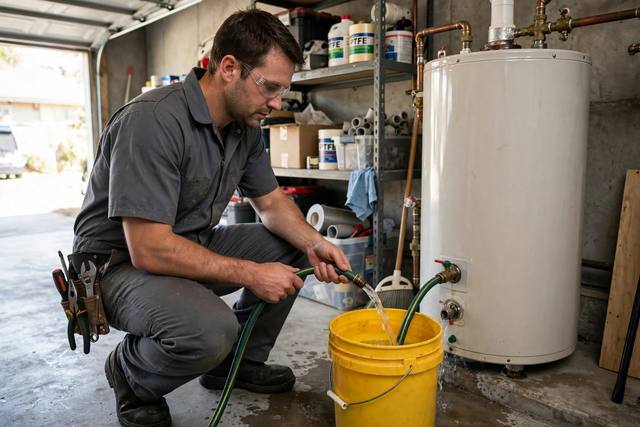
A water heater that suddenly starts popping, rumbling or banging can be unsettling, especially at night. The good news is that the most common cause is manageable. The key is knowing which noises are harmless and which are warning signs. If your Apache Junction water heater has started talking back, here's how to read what it's saying.
What Is Normal and What Is Not
Mild sounds during heating, such as gentle ticking, hissing or a faint gurgle, are common. Expansion of metal parts, water entering the tank and the burner or elements cycling on can all produce them. Loud popping, rumbling, crackling, banging or screeching sounds are different. They deserve attention.
Cause 1: Sediment Buildup (The Most Common)
Water contains dissolved minerals. When it is heated, minerals such as calcium and magnesium separate and settle at the bottom of a tank as sediment. Arizona's hard water makes this especially common. As the layer thickens, water trapped beneath it overheats and bubbles upward through the sediment, creating popping and rumbling sounds. Sediment also:
- Insulates water from the burner or lower element, so the heater works harder
- Reduces the amount of usable hot water
- Raises energy use
- Can overheat the tank bottom, contributing to premature failure
Learn more about how hard water affects water heaters in Arizona and what you can do about it.
Cause 2: Scale on Heating Elements (Electric)
Minerals can coat electric heating elements, producing sizzling or crackling noises as water boils at the scaled surface. Coated elements are less efficient and can burn out sooner.
Cause 3: Water Hammer
A sharp bang when a faucet or appliance shuts off is usually water hammer — a pressure surge in the pipes rather than the heater itself. It can be caused by high water pressure, loose pipes or a missing arrestor. Pressure regulators, water hammer arrestors and securing pipes can help.
Cause 4: Thermal Expansion
Water expands when heated. In a closed plumbing system, excess pressure can cause ticking, banging or relief valve activity. An expansion tank can help in some homes.
Cause 5: Loose Parts or Piping
Pipes that expand and contract as they heat and cool can rub against framing, making ticking or knocking sounds. Loose heat traps or fittings can also vibrate.
Cause 6: Burner or Gas Issues (Gas Heaters)
A dirty burner, flame irregularities or ignition problems can cause roaring, popping or booming sounds. These deserve prompt professional attention. If you smell gas, leave the home and contact your gas utility or emergency services from outside.
Cause 7: Tankless Scale
On tankless water heater units, scale on the heat exchanger can cause rumbling, whistling, error codes or fluctuating temperatures. Periodic descaling is usually recommended by manufacturers.
Is a Noisy Water Heater Dangerous?
Occasionally. Loud popping or rumbling alone is typically a maintenance problem, but heavy sediment can overheat the tank bottom and shorten the heater's life. Call a professional promptly if noise comes with:
- Leaks or water around the base
- Rusty or discolored hot water
- Steam or very hot water at taps
- A relief valve discharging
- A burning smell or scorched wiring
- A gas odor
- Repeated breaker trips or ignition failures
How to Fix a Noisy Water Heater
- Flush the tank. Draining the tank removes loose sediment. Follow the manufacturer's instructions. Because water is hot and valves can be stubborn, many homeowners prefer a professional flush. Heavy buildup in an old tank may not clear completely, and a drain valve that has not been used for years can leak after being opened.
- Replace worn parts. Scaled elements, a failing anode rod or a faulty relief valve can be replaced.
- Lower the temperature. Setting the thermostat around 120°F reduces scale formation and scald risk.
- Address pressure issues. A plumber can test pressure and install a regulator, arrestor or expansion tank if needed.
- Descale tankless units. Follow the manufacturer's schedule.
- Consider a water treatment system. A softener or other treatment can reduce scale throughout the home. Compare options and maintenance before buying.
Regular water heater maintenance — flushing, anode rod checks and inspections — is the most reliable way to keep a heater quiet. And if noise points to a failing part, professional water heater repair can address it before it becomes a bigger problem.
When Is Replacement the Better Choice?
If the heater is 10 or more years old, has never been flushed or leaks, it may be time to evaluate replacement. Flushing an old, heavily scaled tank will not restore it, and replacement may be more cost effective than repeated repairs.
Preventing Noise and Sediment Problems
- Schedule annual maintenance.
- Flush on a schedule appropriate for your water conditions.
- Inspect the anode rod.
- Keep temperature settings moderate.
- Check water pressure.
- Descale tankless units.
- Replace aging heaters before they fail.