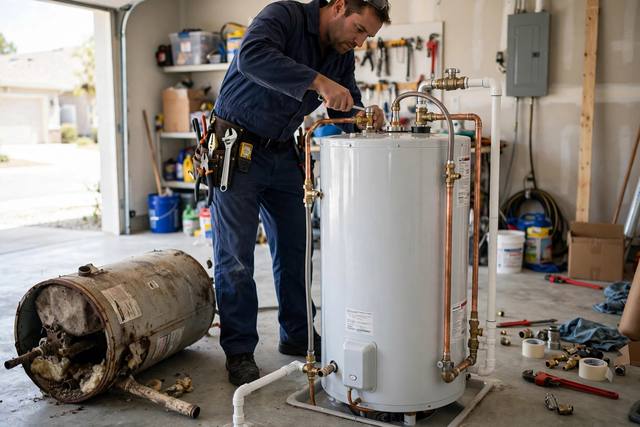
A water heater replacement is one of those expenses nobody plans for. It usually arrives on the same morning as a cold shower or a puddle in the garage. Knowing what drives the price helps you compare quotes calmly and avoid paying for things you do not need. If you're budgeting for a water heater replacement in Apache Junction, start with the ranges and cost factors below.
Typical Replacement Price Ranges
Prices vary by region, equipment and the complexity of the job. For general planning, the factors that move installed cost look like these:
| Heater type | What affects installed cost |
|---|---|
| Standard tank (gas or electric) | Unit size, fuel type, venting and installation complexity |
| Electric tankless | Unit capacity, electrical capacity, venting and installation complexity |
| Gas tankless | Often higher than electric tankless, depending on venting and gas work |
Treat any figure a provider gives you as a quote for your specific job, not a general price. A written, itemized estimate for your own home is the only number that matters.
What Goes Into the Price
- The unit itself. Capacity, brand, efficiency rating and warranty length all affect equipment cost. A 40-gallon tank costs less than a 50- or 75-gallon model, and high-efficiency units cost more than basic ones.
- Fuel type. Electric and gas heaters have different installation needs. Gas units require a gas supply, a proper vent and combustion air. Electric units need adequate circuit capacity.
- Labor. Installation labor depends on access, the condition of existing connections and how many hours the job takes. A like-for-like swap in an open garage is generally simpler than moving a heater to a new location.
- Permits and code work. Depending on your jurisdiction, a permit may be required. Ask the installer what applies in Apache Junction and Pinal County and who handles it. Code updates, such as relief valve discharge piping, expansion tanks or proper supports, can add to the bill.
- Removal and disposal. Some quotes include hauling away the old tank. Others charge separately.
- Extra materials. New shutoff valves, flexible connectors, drain pans, venting or electrical components are sometimes needed.
- Timing. Emergency or after-hours installs can cost more than scheduled work.
Tank vs. Tankless: The Cost Picture
A tank heater usually has the lower upfront price. A tankless unit costs more to buy and install, especially if the home needs an electrical upgrade or gas line changes, but it can reduce standby energy loss and often lasts longer. National estimates suggest electric tankless units can lower annual operating costs by avoiding standby losses, though actual savings depend on your usage and electricity or gas rates. As a rough example: if a tankless installation costs more than a tank unit up front but saves on running costs each year, the extra upfront cost could take several years to recover — before considering the longer life expectancy. If you plan to stay in your home, that can make sense. If you may move soon, a tank may be more economical. For a deeper comparison, see our guide to tank vs. tankless water heaters.
Hidden Costs to Ask About
Before approving a quote, ask whether it includes:
- The new water heater and all connectors
- Labor and testing
- Permit fees if required
- Removal and disposal of the old unit
- Any code-required upgrades
- Warranty terms for the heater and the installation
- Taxes and any service-call or diagnostic fee
A clear quote lists these line by line. If a number seems unusually low, ask what is missing.
Is Replacement Better Than Repair?
Replace when the tank leaks, corrosion is visible, the unit is 10 or more years old or repair costs are climbing. Repair is often reasonable for a younger heater with a single failed part. If your repair estimate approaches half the cost of a new unit on an aging heater, water heater replacement is often the smarter investment.
Arizona Factors That Affect Cost and Lifespan
Hard water leaves scale that shortens tank life and coats heating elements. Garages and exterior closets can get extremely hot in summer. Together these conditions can reduce a heater's lifespan, which makes maintenance and timely replacement more important here than in milder regions. Warm incoming water in summer also means tankless units may need less temperature rise, which can help with sizing. A professional water heater installation accounts for these local conditions from the start.
Ways to Keep Costs Reasonable
- Replace before failure. A planned replacement avoids emergency pricing and water damage.
- Get a written quote and compare what each includes.
- Choose the right size. Bigger is not always better. Oversizing raises equipment cost and energy use.
- Check for rebates. Some utilities and manufacturers offer incentives for efficient models. Verify current offers before relying on them.
- Maintain your new heater. Annual inspections and flushing help it reach its full lifespan.
- Ask about warranties. A longer warranty can offset a higher price.
Does Homeowners Insurance Help?
It depends on the policy. Sudden water damage may be covered in some cases, while wear and tear and the heater itself usually are not. Review your policy or call your insurer before work begins.