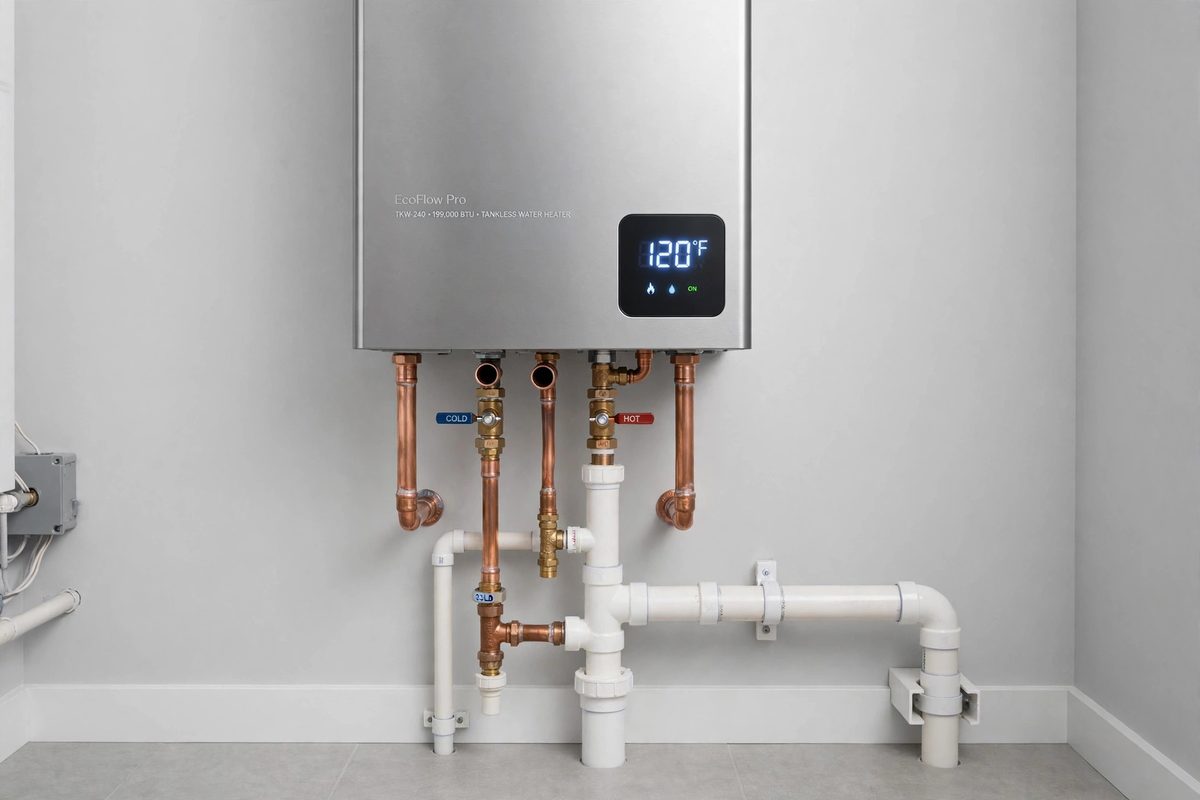
What "hard water" means for your water heater
Hard water carries dissolved calcium and magnesium. Those minerals are harmless to drink, but heat is their trigger: every time water is heated, some of those minerals precipitate out as solid scale. Your water heater is essentially a machine that heats water all day, every day — so it collects scale faster than anything else in the house. In areas with very hard water, a tank can accumulate a meaningful layer of sediment within a year or two.
What sediment does inside a tank
Sediment settles at the bottom of the tank, right where the burner or lower element does its work. The effects stack up:
- Longer heat-up times. The burner or element heats rock instead of water, so recovery slows and hot water runs out sooner.
- Higher energy use. More fuel or electricity is needed to push heat through the mineral layer.
- Rumbling and popping. Water trapped under sediment flashes to steam, making the classic rumbling noise.
- Accelerated tank wear. Overheated spots and a depleted anode rod let corrosion attack the steel tank sooner.
- Clogged fixtures downstream. Loose sediment can migrate into pipes, valves, and aerators.
The net result: water heaters in hard-water areas tend to live shorter, less efficient lives than identical units on soft water — unless they're maintained.
Why tankless units are hit even harder
Tankless water heaters don't store sediment, but their narrow heat-exchanger passages are extremely sensitive to scale. Even a thin coating insulates the exchanger, forcing longer burn times and triggering overheating error codes. Manufacturers of Tankless Water Heater Service generally recommend descaling at least annually — in very hard water, some providers suggest even more often. Skipping it is the fastest way to turn a 20-year unit into a 10-year unit.
Signs hard water is winning
Watch for the classic sediment symptoms: popping or rumbling during heating, hot water that runs out sooner than it used to, lukewarm output despite a correct thermostat setting, and visible grit or cloudy water from hot taps. On tankless units, look for new error codes, reduced flow, or temperature swings. Any of these merit a professional look before the damage compounds.
What actually helps
Regular tank flushing
Draining a few gallons from the tank's drain valve — or a full flush — removes loose sediment before it compacts. Many providers include this in water heater maintenance visits. Note: on very old tanks that have never been flushed, disturbing heavy sediment can occasionally expose a weakened tank, so providers assess the unit's condition first.
Anode rod checks
The sacrificial anode rod corrodes so the tank doesn't have to. In aggressive water it depletes faster, and replacing it on schedule is one of the cheapest life-extenders available. This is quick professional work, not a homeowner project.
Water softening or conditioning
A whole-house softener removes the hardness minerals before they ever reach the heater, dramatically slowing scale formation. It's an investment, but for homes with very hard water it protects every water-using appliance, not just the heater. A provider can discuss whether your water profile makes it worthwhile.
Annual tankless descaling
Tankless owners should treat descaling like an oil change: routine, non-optional, and far cheaper than the alternative. Providers flush the system with a descaling solution and inspect filters and sensors at the same time.
The takeaway for Apache Junction homeowners
Hard water isn't going away, but its damage is largely preventable. A maintenance rhythm — flushing tanks, checking anodes, descaling tankless units — keeps efficiency up and adds years to equipment life. If your unit is already showing sediment symptoms, don't wait for them to become a leak. Call (480) 919-8156 or Contact Us and we'll connect you with a local provider who can evaluate your water heater and get it back on track.