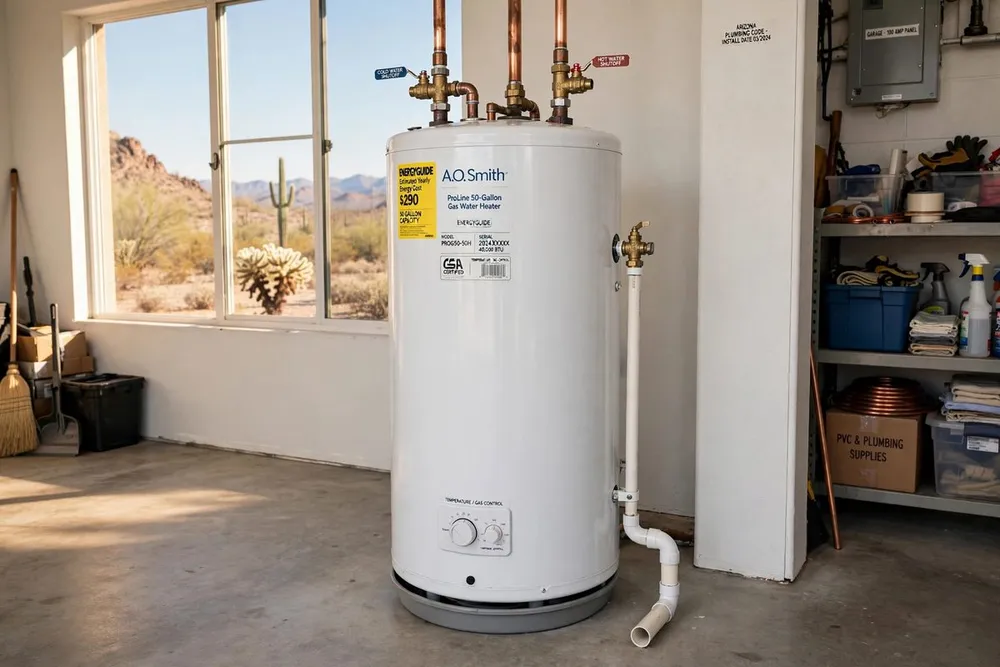
1. You have no hot water at all
The most obvious sign is also the most urgent. A complete loss of hot water on a gas unit often traces to a pilot light, igniter, or gas control problem; on an electric unit, to a tripped breaker, failed element, or thermostat. Check the breaker panel first — if the breaker is fine, it's time for a professional diagnosis rather than guesswork, especially with gas equipment. If you're dealing with this right now, emergency water heater repair connections are available for urgent situations.
2. Hot water runs out much faster than it used to
When a 50-gallon tank suddenly behaves like a 20-gallon tank, something has changed inside. Sediment buildup is the usual culprit in Arizona: mineral deposits displace water and insulate the burner or elements from it. A failing lower heating element on electric models produces the same symptom. A provider can test the elements and assess sediment levels to tell you whether a flush, a part replacement, or something bigger is in order.
3. The water is lukewarm, never truly hot
Consistently lukewarm water points to a thermostat set too low, a thermostat that's misreading, or a burner or element that's only partially doing its job. It can also signal a broken dip tube, which lets cold incoming water mix with the hot water at the top of the tank. Because several different parts cause the same symptom, this is a classic case where professional water heater repair diagnosis saves you from replacing parts at random.
4. Rumbling, popping, or banging noises
A quiet water heater is a happy water heater. Rumbling and popping sounds mean water is boiling underneath a layer of sediment — the mineral crust traps heat, the water flashes to steam, and the tank rumbles. Beyond being noisy, this stresses the tank and wastes energy. Regular flushing prevents it, but once buildup is severe, a provider needs to evaluate whether the tank is still sound.
5. Rusty or discolored hot water
Fill a white bucket from the hot tap. If the hot water is rusty while the cold runs clear, the corrosion is likely inside your tank — often a sign the sacrificial anode rod is spent and the steel tank is next. This is one of the stronger "start planning" signals. A provider can inspect the anode and give you an honest read on how much life the tank has left, including whether water heater replacement is the smarter move.
6. Moisture, drips, or pooling around the unit
Small drips from a fitting or valve are often repairable. Water pooling under the tank itself is a different story — it usually means the tank has corroded through, and tanks can't be patched reliably. Either way, don't ignore it: even a slow leak in a garage or utility closet can damage flooring and walls. Shut off the cold-water supply valve above the unit and call for help.
7. The unit is old and repairs are getting frequent
Most tank water heaters last roughly 8 to 12 years. If yours is in that range and you've already paid for a repair or two, each additional fix buys less and less time. Frequent service calls on an aging unit are the market's way of telling you to price out a replacement. A provider can compare the repair cost against replacement and help you decide with real numbers for your situation.
What to do next
One or two mild symptoms — a little noise, slightly shorter showers — usually mean maintenance is overdue. Multiple signs together, any leak, or a total loss of hot water mean it's time to talk to a professional. Call (480) 919-8156 or Contact Us with a description of your symptoms, and we'll put you in touch with a local provider for a proper diagnosis.