
How to Flush a Water Heater
Flushing removes sediment and helps a tank last longer. Learn the safe steps, the warnings, and when to call a
Testing a water heater T&P valve takes a minute, and it tells you whether the tank’s main safety device still works. If it does not, call a provider promptly.
Place a bucket under the discharge pipe, then lift the test lever briefly. Hot water should flow out, and stop when you release the lever.
Stand clear of the discharge — the water is scalding hot.
If water flows and stops cleanly, the valve works. If no water comes out, the valve may be stuck shut, which is a safety problem.
If water keeps dripping after the test, the valve may be worn, or the home may have high water pressure or a failed expansion tank.
Most manufacturers suggest testing once or twice a year, as part of routine maintenance.
If the valve is old, corroded, or has never been tested, ask a provider to check it rather than forcing the lever.
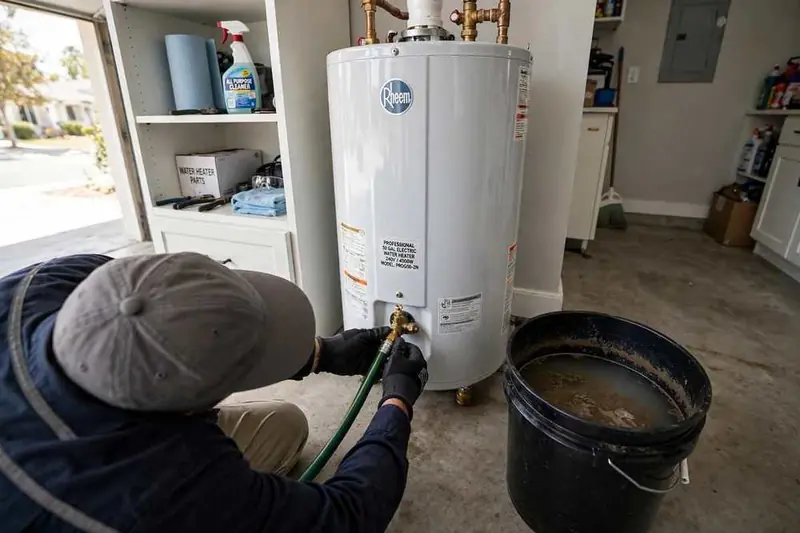
Flushing removes sediment and helps a tank last longer. Learn the safe steps, the warnings, and when to call a
The anode rod protects your tank from rust. Learn how to check it, when to replace it, and what it looks like
Diagnosis and repair of tank, tankless, gas and electric units.
Most manufacturers suggest lifting the test lever once or twice a year. If it does not open, or does not reseat and keeps dripping, call a provider.
Yes, with care — the water is scalding hot, so stand clear of the discharge and use a bucket. If the valve is old or corroded, ask a provider to check it.
The valve may be worn, or the home may have high water pressure or a failed expansion tank. Call a provider to find which one it is.
Call (480) 919-8156 and describe what your water heater is doing. Elite will connect your request with an available independent local provider — the provider handles diagnosis, pricing, scheduling and the work directly with you.